venture / explainer
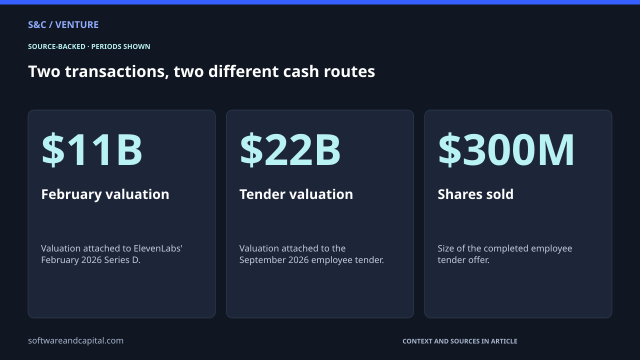
A $300 million employee tender repriced ElevenLabs from $11 billion to $22 billion while letting existing holders sell shares. The valuation changed even though this was not a conventional company fundraising round.
venture / analysis
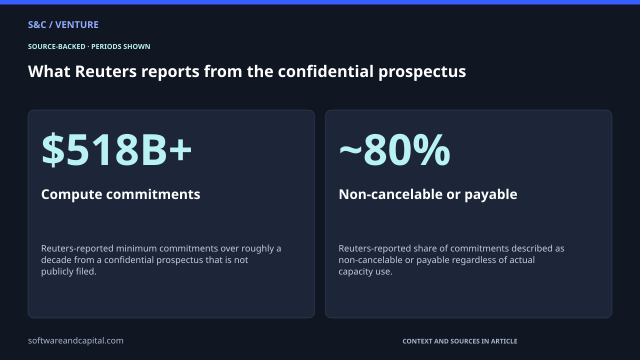
Reuters reports that Anthropic’s confidential prospectus describes at least $518 billion of decade-long compute commitments, much of it non-cancelable. That is different from simply spending $518 billion on data centers.
venture / explainer
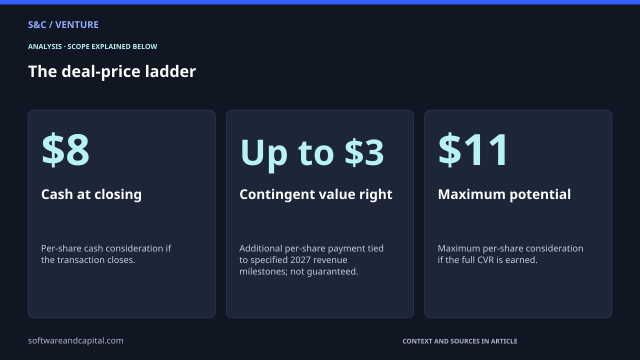
SoundThinking’s sale includes $8 in cash plus a contingent value right worth up to $3 more. It is a clean example of how buyers and sellers can split disagreement about future performance.
venture / analysis
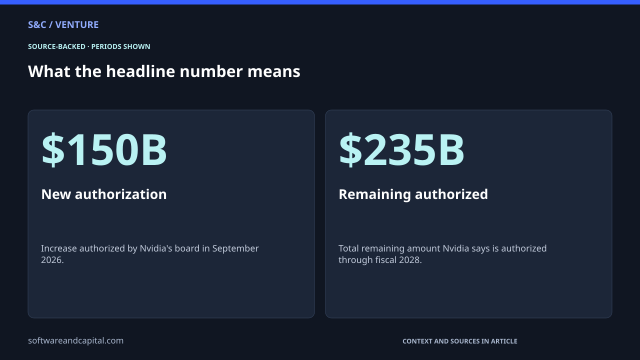
Nvidia’s enlarged repurchase authorization is enormous, but an authorization is permission, not a completed use of cash. Here is what the $235 billion figure means.
venture / analysis
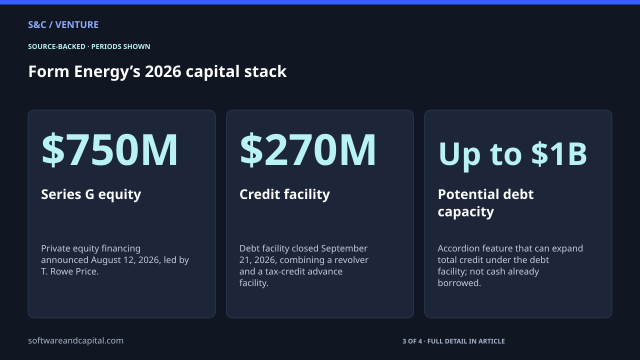
Form Energy’s financing shows why scaling a hardware manufacturer can require equity, revolving credit and advances against production tax credits at the same time.
venture / explainer
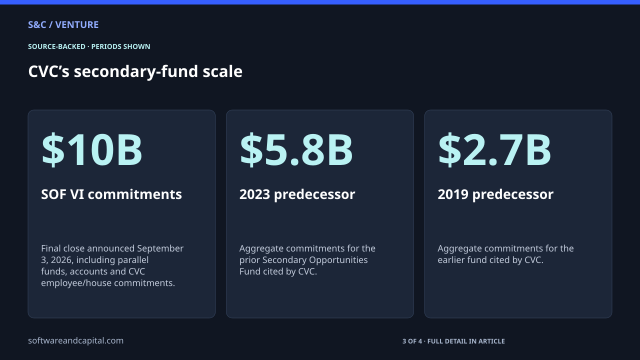
CVC raised $10 billion for a fund that buys existing private-equity interests and GP-led deals. The structure turns illiquid fund positions into a secondary market.
venture / analysis
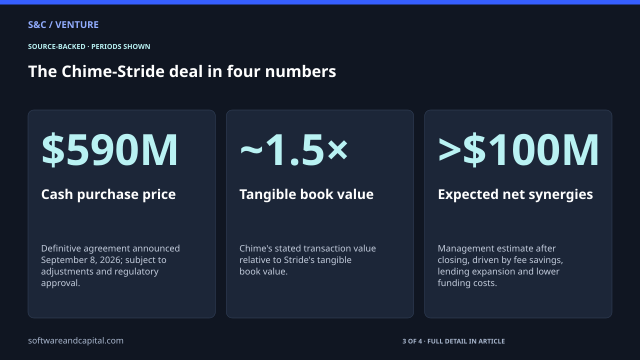
Chime built the app while partner banks supplied regulated infrastructure. Buying Stride shows what changes when a fintech starts owning more of the stack.
venture / question led
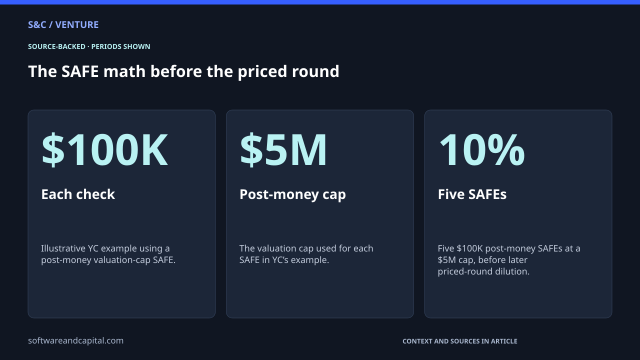
Post-money SAFEs make ownership math visible before the priced round. Five small checks can add up to a much larger slice than any one check suggests.
venture / analysis
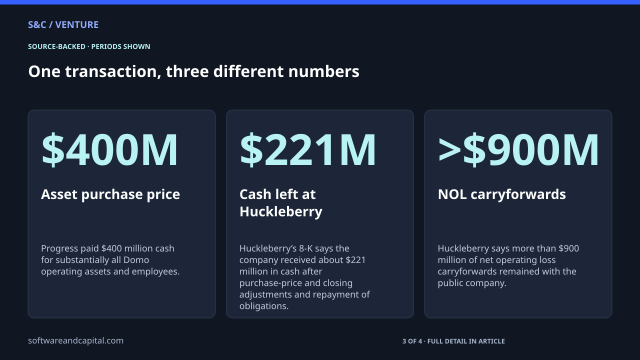
Progress bought substantially all of Domo’s operating assets and employees for $400 million. The listed company survived as Huckleberry with roughly $221 million in cash and more than $900 million of tax-loss carryforwards.
venture / news analysis
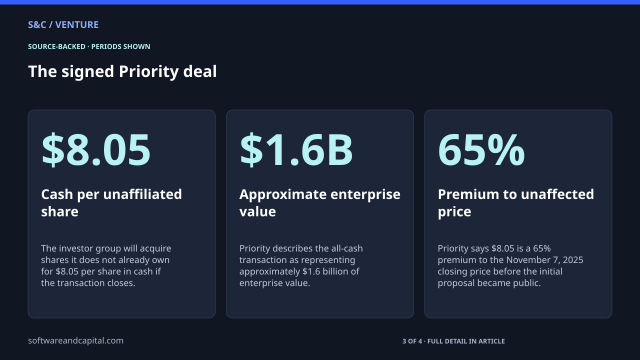
Priority’s CEO-led investor group agreed to pay $8.05 per unaffiliated share in a transaction valued at about $1.6 billion. The deal shows why special committees and minority-holder votes matter when management is also the buyer.
venture / company analysis
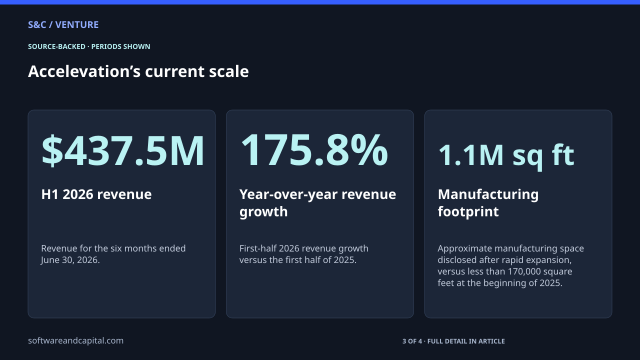
Accelevation makes power, cooling and modular infrastructure for data centers. Its proposed IPO shows how AI demand is flowing into the physical suppliers beneath chips and cloud services.
venture / analysis
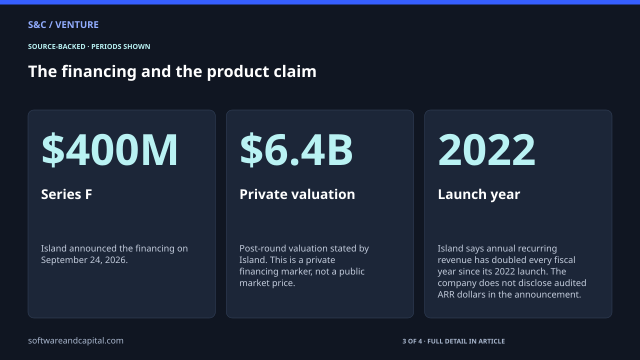
Island’s Series F puts a $6.4 billion private valuation on a company that started with an enterprise browser and now pitches a broader control plane for people and AI agents.
venture / company analysis
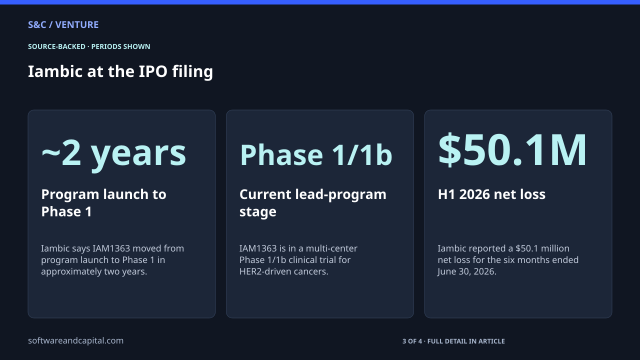
Iambic’s S-1 turns an AI-drug-discovery story into a public-company filing with a real clinical pipeline, partnerships, losses and the long regulatory path still ahead.
venture / analysis
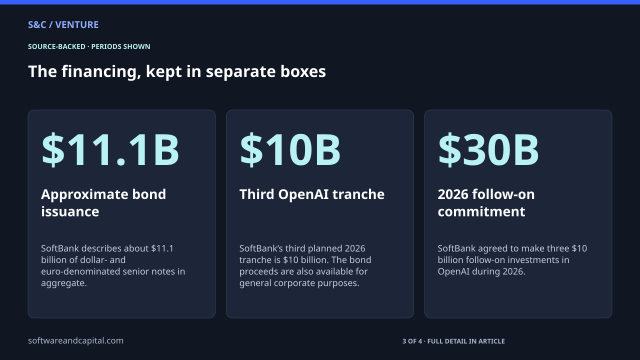
SoftBank has turned part of its giant OpenAI investment into a public-debt story. The new bonds show how private AI bets are reaching the rated credit market.
venture / company analysis
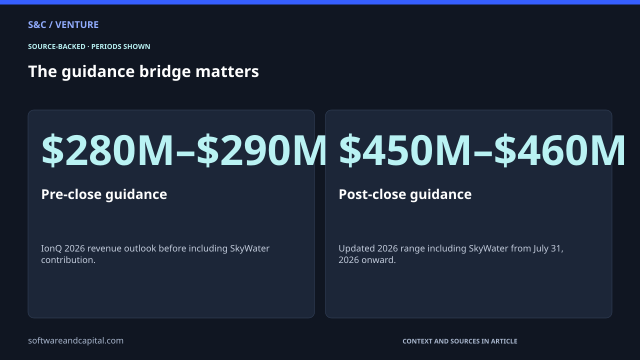
IonQ’s SkyWater acquisition changes both its manufacturing stack and the way investors should read its higher 2026 revenue guidance.
venture / news analysis
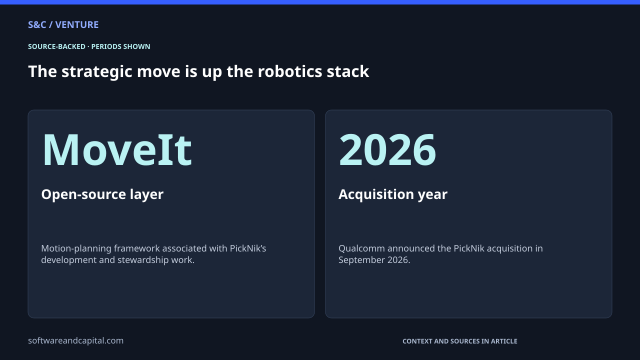
Qualcomm’s PickNik acquisition reaches from robotics compute into MoveIt, a widely used open-source motion-planning layer.
venture / analysis
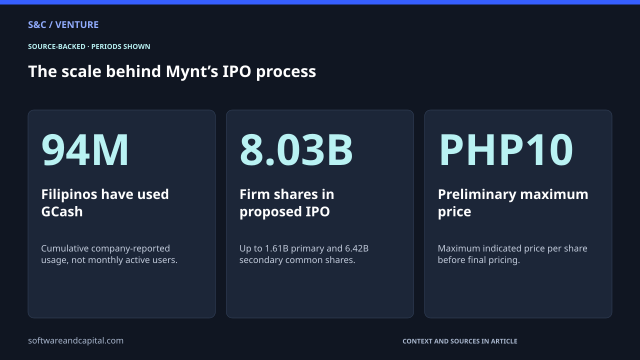
Mynt’s planned IPO puts a public-market price process around GCash, a wallet that has expanded into savings, credit, investing and everyday payments.
venture / analysis
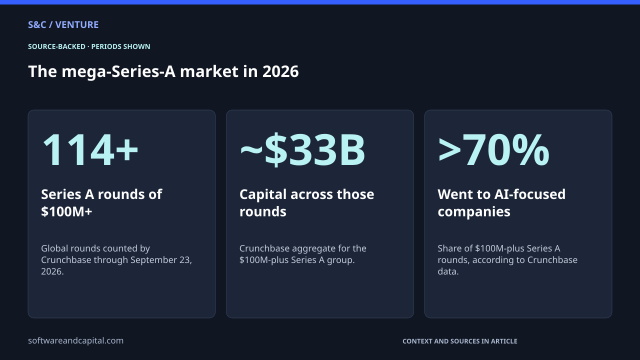
Series A used to sound like shorthand for a young startup. In 2026, at least 114 global Series A rounds have reached $100 million or more, according to Crunchbase.
venture / question led
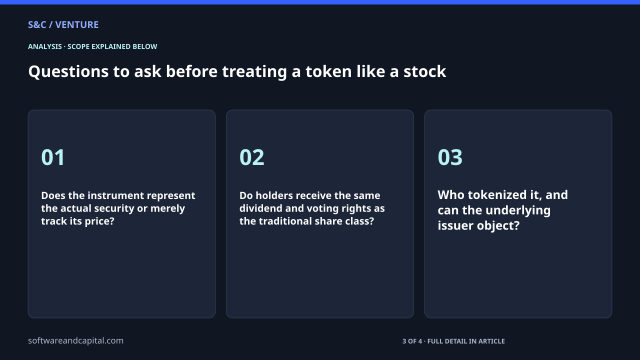
The SEC’s new framework draws a sharp line between tokenized U.S. stocks and synthetic trackers. Here is what happens to dividends, voting rights and the trading venue.
venture / analysis
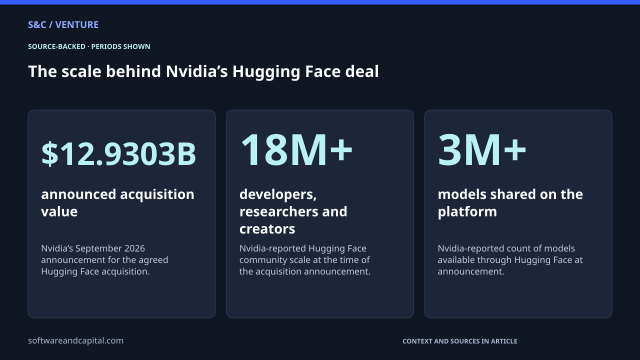
Nvidia already dominates AI compute. Its $12.93 billion Hugging Face deal would add a major distribution and collaboration layer for open models, datasets and apps.
venture / analysis
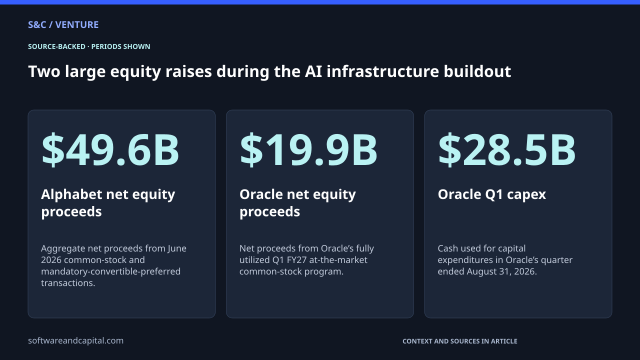
Alphabet raised $49.6B in net equity proceeds in June and Oracle raised $19.9B net through an ATM program in its latest quarter. Both were simultaneously scaling capital-intensive AI infrastructure.
venture / company analysis
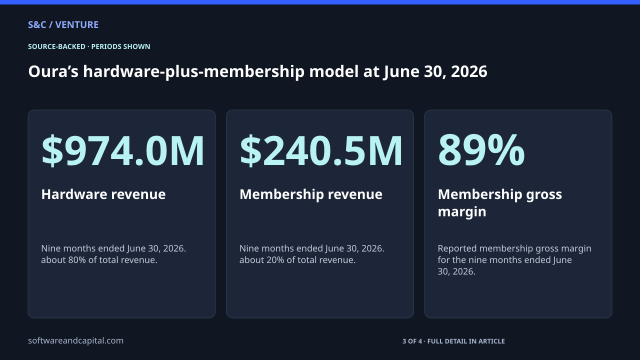
Oura’s amended S-1 shows a hardware-led business with a high-margin recurring layer: membership was about 20% of nine-month revenue and carried an 89% gross margin.
venture / analysis
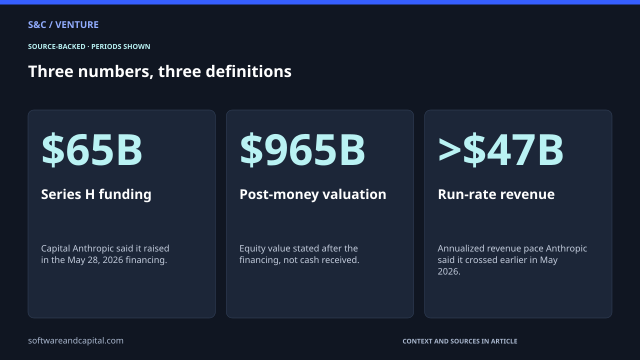
Anthropic’s May 2026 financing put three giant numbers in one announcement: $65B raised, a $965B post-money valuation and a $47B revenue run rate.
venture / analysis
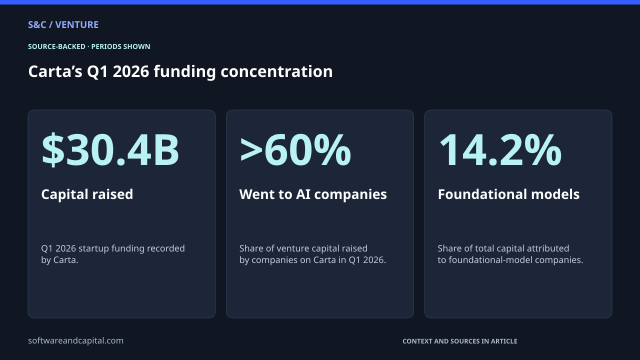
Carta recorded $30.4 billion of Q1 2026 startup funding, with more than 60% going to AI. The recovery looks very different outside the hottest category.
venture / analysis
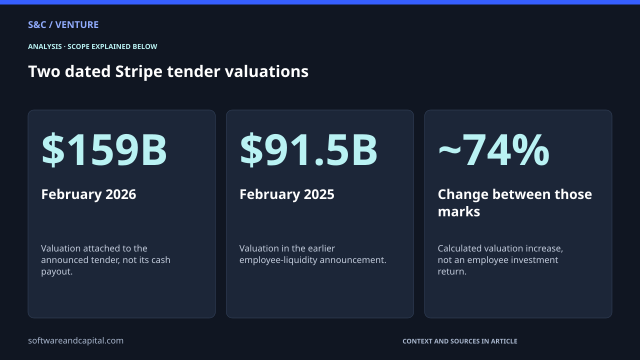
Stripe’s February 2026 tender offer shows how employees can sell private shares without taking the whole company public. Follow who supplies the cash.
venture / analysis
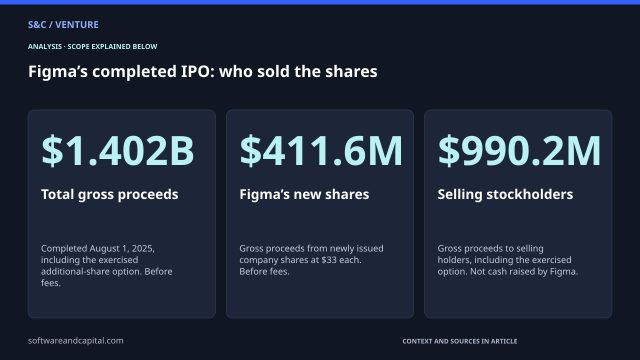
An IPO can fund the company and pay existing shareholders at the same time. Figma’s 2025 offering shows why the headline deal size is not the cash the business receives.